Thursday, July 9, 2009

Robot Learns to Smile and Frown: More Images!


more photos from the robot facial expression story I posted yesterday:
credit: UC San Diego / Erik Jepsen

A hyper-realistic Einstein robot at the University of California, San Diego has learned to smile and make facial expressions through a process of self-guided learning. The UC San Diego researchers used machine learning to “empower” their robot to learn to make realistic facial expressions.

“As far as we know, no other research group has used machine learning to teach a robot to make realistic facial expressions,” said Tingfan Wu, the computer science Ph.D. student from the UC San Diego Jacobs School of Engineering who presented this advance on June 6 at the IEEE International Conference on Development and Learning.

Download the paper at:


Wednesday, July 8, 2009

Shaking Replica of an Historic Masonry Building: Simulating Strong Earthquakes


Tune in tomorrow, July 9, for live streaming video. See UC San Diego researchers shake a three-story, 1920s era masonry building on the world’s largest outdoor shake table during a series of simulated earthquakes ranging from about 5.0-7.0 in magnitude.

Web cam links: (updated thursday morning before testing)
If you have trouble viewing in IE, try Firefox or another browser or try:
http://oneiros.sdsc.edu/~neesit/Shing-Englekirk3.jnlp

We'll be following the tests via this blog and the Jacobs School's Twitter profile tomorrow.
http://twitter.com/UCSDJacobs

Thursday's test builds on shakes performed on a similar structure last November. Watch a related video here and read more via the link below. The tests will be performed at the UCSD Englekirk Structural Engineering Center.


Tuesday, July 7, 2009

Robot Learns to Smile


Download the paper here

Read the press release here

A Calit2 photographer took great photos of the Einstein robot earlier this year:
http://www.flickr.com/photos/calit2/sets/72157614016199411/
the photo credit for any of these robot images on Flikr is:
UC San Diego / Erik Jepsen

A hyper-realistic Einstein robot at the University of California, San Diego learned to smile and make facial expressions through a process of self-guided learning. The UC San Diego researchers used machine learning to “empower” their robot to learn to make realistic facial expressions.

“As far as we know, no other research group has used machine learning to teach a robot to make realistic facial expressions,” said Tingfan Wu, the computer science PhD student from the UC San Diego Jacobs School of Engineering who presented this advance on June 6 at the IEEE International Conference on Development and Learning.

The faces of robots are increasingly realistic and the number of artificial muscles that controls them is rising. In light of this trend, UC San Diego researchers from the Machine Perception Laboratory are studying the face and head of their robotic Einstein head in order to find ways to automate the process of teaching robots to make realistic facial expressions. Read the full story here.

Watch an overview video (and read related story) about the Einstein robot research program at the Machine Perception Laboratory at UC San Diego.

Monday, July 6, 2009

Engineering Undergrads are International Researchers


There are 24 Jacobs School undergrads spread across the Pacific Rim and India right now. The students are working in research laboratories and at the same time getting to enjoy life as a student studying abroad.

If you are an undergrad or prospective undergrad, this could be you in the next year or two. Summaries of the student projects and their exciting locations listed here on the Jacobs School site.

Calit2's web story includes reactions from students who participated in past years.

Spanish translation of the Calit2 story is linked here.

Visit the PRIME site here (Pacific Rim Undergraduate Experiences)

Thursday, July 2, 2009

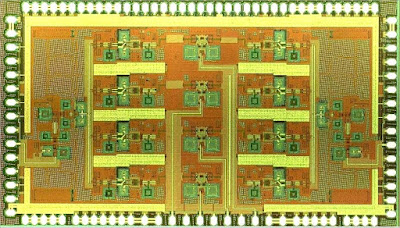
Phased Array Fantastic


Gabriel Rebeiz, an electrical engineering professor, released a joint UC San Diego / Jazz Semiconductor press release today.


“UCSD believes that the quad-beam phased array receiver will enable
high-performance phased arrays for satellite communications by integrating many
functions on the same silicon chip and replacing several GaAs ICs, drastically
lowering the cost of phased array assembly,” said Dr. Gabriel M. Rebeiz,
Professor of Electrical Engineering at UC San Diego’s Jacobs School of
Engineering, a co-developer of this chip.


Wednesday, July 1, 2009

Biological Dynamics Stands Tall

Raj Krishnan and the UC San Diego student-run bioengineering startup company Biological Dynamics did not win the $250,000 first place at the DFJ Cisco Global Business Plan Competition. (Click here for background.)

Krishnan remains upbeat and optimistic. “We aren’t done yet, not by a long shot.”

First prize went to Husk Power Systems Inc., a company that turns rice husks into energy. The company is already powering a small town in India. Read a quick summary on the Wall Street Journal’s Venture Capital Dispatch blog.

“The competition was world-class and the process was extremely useful and exciting. Just making the finals is a great honor,” said Krishnan, whose team swept student research and business plan competitions across UC San Diego, the UC System and the region.

According to the story on Venture Capital Dispatch, posted by Timothy Hay, 15 executives from both Cisco and DFJ helped narrow the field of 16 finalists.

Draper said he has plans to follow up with seven of the start-ups he came across.

“I wouldn’t be surprised if we funded four of them,” said Draper, DFJ founder.

“We learned a lot, and got to see the best of the best presentations worldwide. We will apply our knowledge to further improve our presentation for the upcoming $250K first prize Qualcomm QPrize competition, which we hope to win.”

The finals for the Qualcomm QPrize will be held in November 2009 here in San Diego.

Tuesday, June 30, 2009

Good Luck Raj Krishnan! ...break a leg...errr...pipette!


Xconomy San Diego highlighted just how big of a day it is for Raj Krishnan and the rest of the UC San Diego startup, Biological Dynamics. They aim to provide better early diagnosis tools for cancer. Today, Krishnan competes for $250,000 in the DFJ Cisco Global Business Plan Competition.