Wednesday, September 12, 2012
International Conferences Chooses Jacobs School Paper as Top 5 in Past 30 Years
The International Conference on Computer Design chose a paper coauthored by Dean Tullsen, a computer scientist at the Jacobs School of Engineering, and George Cai, of Intel, as one of the five mostly influential papers in the conference's 30-year history.
"This is the sort of stuff that puts CSE and UCSD on the map," Rajesh Gupta, chair of computer science at the Jacobs School, wrote in an email announcing the honor.
The paper, "Power-Sensitive Multithreaded Architecture," published in 2000, was first to quantify the energy advantages of multithreaded architectures, which can provide significant performance gains with marginal increased power cost. It also presented architectural optimizations which would enable a multithreaded architecture to achieve the trifecta: lower power, higher performance, and lower energy than conventional architectures.
Paper co-author and Jacobs School alum John Seng, now a professor at Cal Poly San Luis Obispo, will present a retrospective on the paper during a special session at the conference, which takes place from Sept. 30 to Oct. 3 in Montreal.
Read the abstract and full paper here.


Monday, August 27, 2012
Robotic Hat Project Inspires Girls
It’s not often you hear a room full of tween and teen-age girls discussing breadboards, LEDs and Arduino servos like they were the latest hot fashion accessories from Forever 21.
Congratuations to Jacobs School alumna Saura Naderi for making this happen. Read the full story, "Girls Hat Day' Melds Fashion and Function to Get Girls Interested in Engineering" on the Calit2 website. The video is below.
Thursday, August 23, 2012
Renewable Energy Program Pushes Novel Concepts Forward
Joshua Windmiller, a postdoctoral researcher working in the lab of UC San Diego nanoengineering Professor Joseph Wang, is working on a commercially viable printed biofuel cell that could derive power from urine, sewage and other wastewater sources. The technology is designed to meet a need for field-deployable and mobile power solutions particularly for recharging the electronic devices that soldiers carry with them into the battlefield such as night vision goggles, GPS systems, and two-way radios in order to prolong deployments. This technology could lighten the load of batteries soldiers must carry with them on missions into remote areas.
Windmiller is one one of the awardees of four new graduate fellowships from the von Liebig Center for Entrepreneurism and Technology Advancement at UC San Diego to pursue the commercialization of research that will increase energy efficiency and the growth of renewable energy sources. The fellowships are funded through the Southern California Clean Energy Technology Acceleration Program, funded by the U.S. Department of Energy’s Office of Energy Efficiency and Renewable Energy and in partnership with UC San Diego Rady School of Management and San Diego State University.
Wednesday, August 22, 2012
Jacobs Legacy Videos on YouTube
We recently posted our Jacobs Legacy videos to the Jacobs School YouTube channel. This series of videos represents a video biography of Irwin M. Jacobs, prepared on the occasion of his 70th birthday (in 2003). More info here.
Thursday, August 9, 2012
Pattern Insight

UC San Diego computer science professor YY Zhou co-founded Pattern Insight with her research team, back when she was a prof at UIUC.
The big news this week: "Pattern Insight today announced that it has come to an agreement with VMware Inc. to sell its Log Insight product, together with its team and technology."
Thursday, August 2, 2012
Computer Science Professors Receive $500 NSF Award
This just in from the CSE Monthly Newsletter:


"Steve Swanson and Yannis Papakonstantinou combine their hardware architecture and database expertise in the project "Re-engineering Database Systems for Fast Solid State Drives", which was recently awarded $500,000 by the National Science Foundation.
A new class of non-volatile, solid-state memories (e.g., phase-change memory, spin-torque MRAMs, and the memristor) are emerging that promise to revolutionize the way that computer systems store and
process data. Getting the full benefit of these new memories requires us to re-engineer database systems. This project is analyzing the implications for these new memories on database systems and devising now hardware and software mechanisms to improve performance in transacting with the database, improve performance in analyzing Big Data and reduce energy consumption.
process data. Getting the full benefit of these new memories requires us to re-engineer database systems. This project is analyzing the implications for these new memories on database systems and devising now hardware and software mechanisms to improve performance in transacting with the database, improve performance in analyzing Big Data and reduce energy consumption.
The potential impacts of these optimizations is wide-reaching. Database (in various forms) constitute the heart of the cloud computing infrastructure that supports many of the "killer apps" that are driving technologies forward. Leveraging these new technologies, will make it cheaper, easier, and greener to implement existing applications and will enable new applications that are not currently possible."
Tuesday, July 31, 2012
Bioengineering Professor Has Asteroid Named After Him
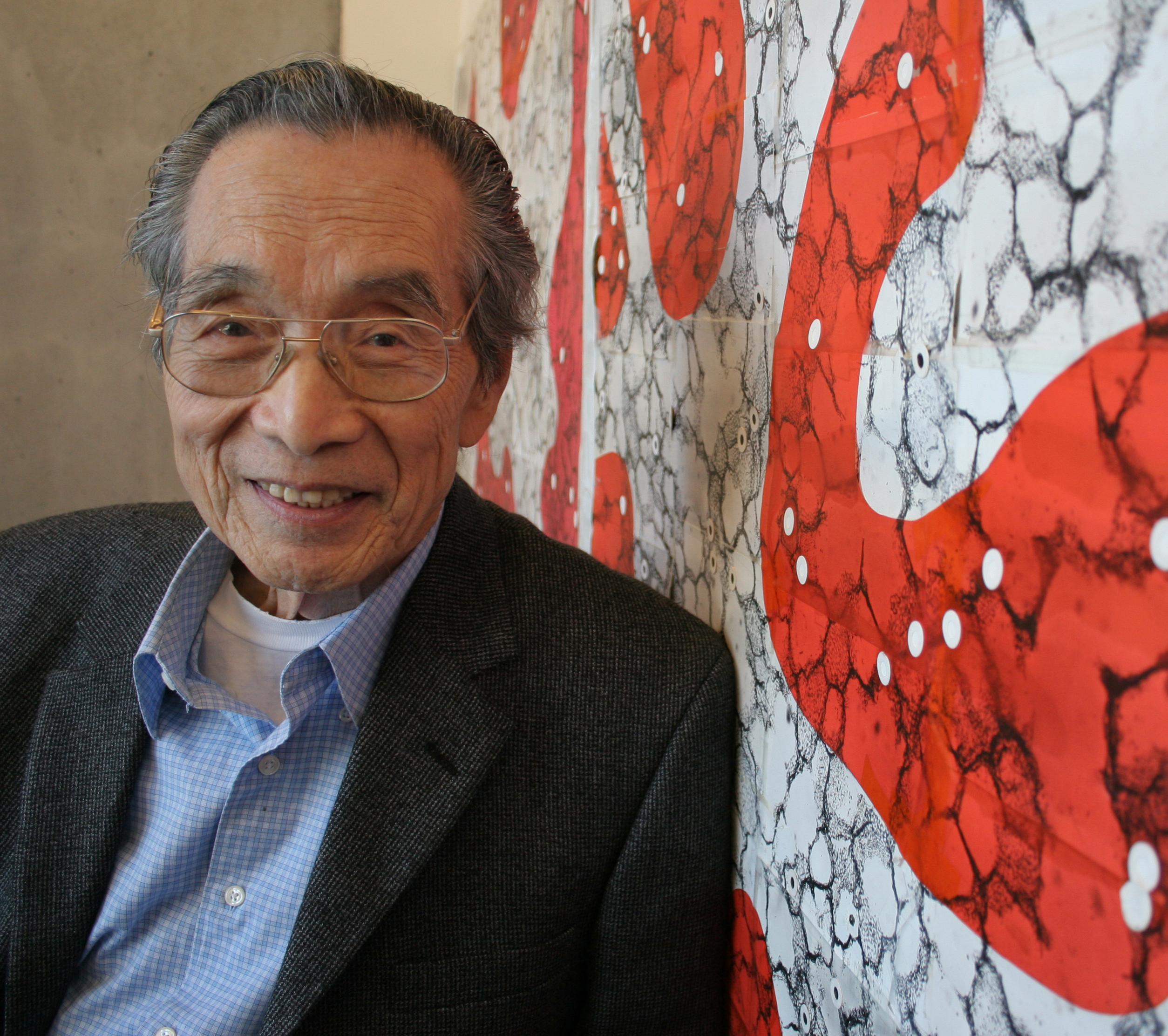
Bioengineering emeritus professor Y.C. Fung, widely recognized as the father of biomechanics, can add an usual honor to the long list of accolades he has received: an asteroid has been named after him.
210434 Fungyuancheng orbits about 2.425 astronomical units from the Earth, in the vast asteroid belt that separates the inner solar system, and the smaller planets, including Earth, from Jupiter and the other gas giants. The asteroid was discovered on Dec. 20, 2008. The International Astronomical Union approved its new name earlier this month.
Fung joined UCSD in 1966 to initiate a B.S., M.S. and Ph.D. program in bioengineering. He is the recipient of the President's National Medal of Science, the Founder's Award from the National Academy of Engineering and numerous other prestigious honors and prizes. He is a member of the National Academy of Engineering, National Institute of Medicine and National Academy of Sciences. He has written many authoritative books on biomechanics that are used as textbooks around the world, in addition to books on solid mechanics and continuum mechanics. Prior to joining UC San Diego, Fung was a faculty member in the Department of Aeronautics at the California Institute of Technology, where he received his Ph.D. in 1948.
Fung’s accomplishments and insights have directly contributed to designs, inventions, and applications that save lives, mitigate the severity of soft tissue injury, enhance the recovery and functionality of injured soft tissue, and improve the effectiveness and longevity of prosthetic orthopedic devices. His research contributed to the development of artificial skin, which has accelerated healing for millions of people with burns and other tissue trauma. Fung’s research also is the basis for the entire field of automotive safety design – all automobile crash tests today rely on his fundamental studies about tissue response.
Fung’s accomplishments and insights have directly contributed to designs, inventions, and applications that save lives, mitigate the severity of soft tissue injury, enhance the recovery and functionality of injured soft tissue, and improve the effectiveness and longevity of prosthetic orthopedic devices. His research contributed to the development of artificial skin, which has accelerated healing for millions of people with burns and other tissue trauma. Fung’s research also is the basis for the entire field of automotive safety design – all automobile crash tests today rely on his fundamental studies about tissue response.
Fung's theories on the mechanical properties and functions of blood cells and capillary blood vessels have led our understanding of microcirculation, endothelial biology, and atherosclerosis. His "sheet-flow" theory provided a quantitative description of pulmonary circulation, hypertension, edema and respiratory distress syndrome. Problems related to severe thorax impact injuries have been solved by Fung's "stress wave propagation" theory. More recently, Fung directly contributed to tissue engineering through the development of engineered products for treating burns and severe tissue injuries and the development of engineered blood vessels.
Subscribe to:
Posts (Atom)